Rotary Lip Seals: Crimped Case Seal vs. Componentized Design
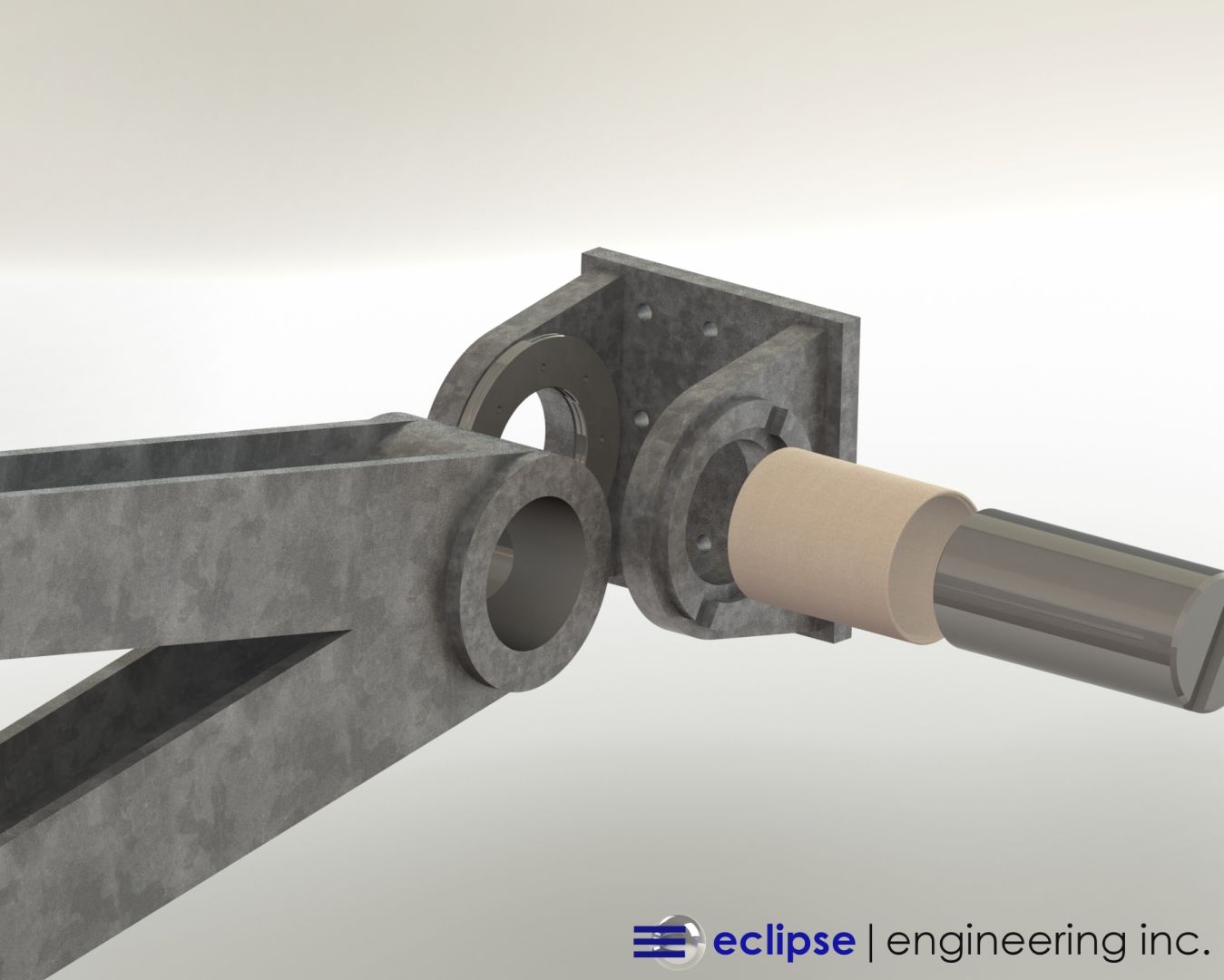
If you have an application with a rotating shaft, you likely need a seal. Rotary shaft seals most often take the form of what is commonly known as an “oil seal.” These usually consist of an elastomeric sealing lip with a molded-in metal case to facilitate a press-fit into the hardware.
Oil seals are typically mass produced and are usually available from stock in a variety of sizes. They function best in oil-lubricated environments such as engine crankcases or gearboxes. But in dry-running applications, a PTFE-based sealing element may be needed.
In addition to not needing lubrication, PTFE lip seals also provide a number of advantages over elastomeric oil seals. PTFE’s ability to handle much higher temperatures means higher rotational speeds can be achieved. High-wear fillers can be added for much longer service intervals when compared to elastomers. Friction characteristics will also be far superior, therefore lowering torque requirements.
As more and more modern applications turn to electric motors rather than internal combustion engines, the need for low-friction, dry-running rotary shaft seals is growing. Most motors will require an environmental shaft seal to keep dust, water, and debris from entering the internals.
There are two main designs for incorporating a PTFE seal element into a metal case. The first is what Eclipse calls their Crimped Case Seal (CCS), and the second is the more traditional componentized design. Both have pros and cons, and we’ll discuss what applications might better suit one design over the other. With the ability to offer either design, Eclipse is here to provide you with the best solution possible.
The Crimped Case Seal (CCS)
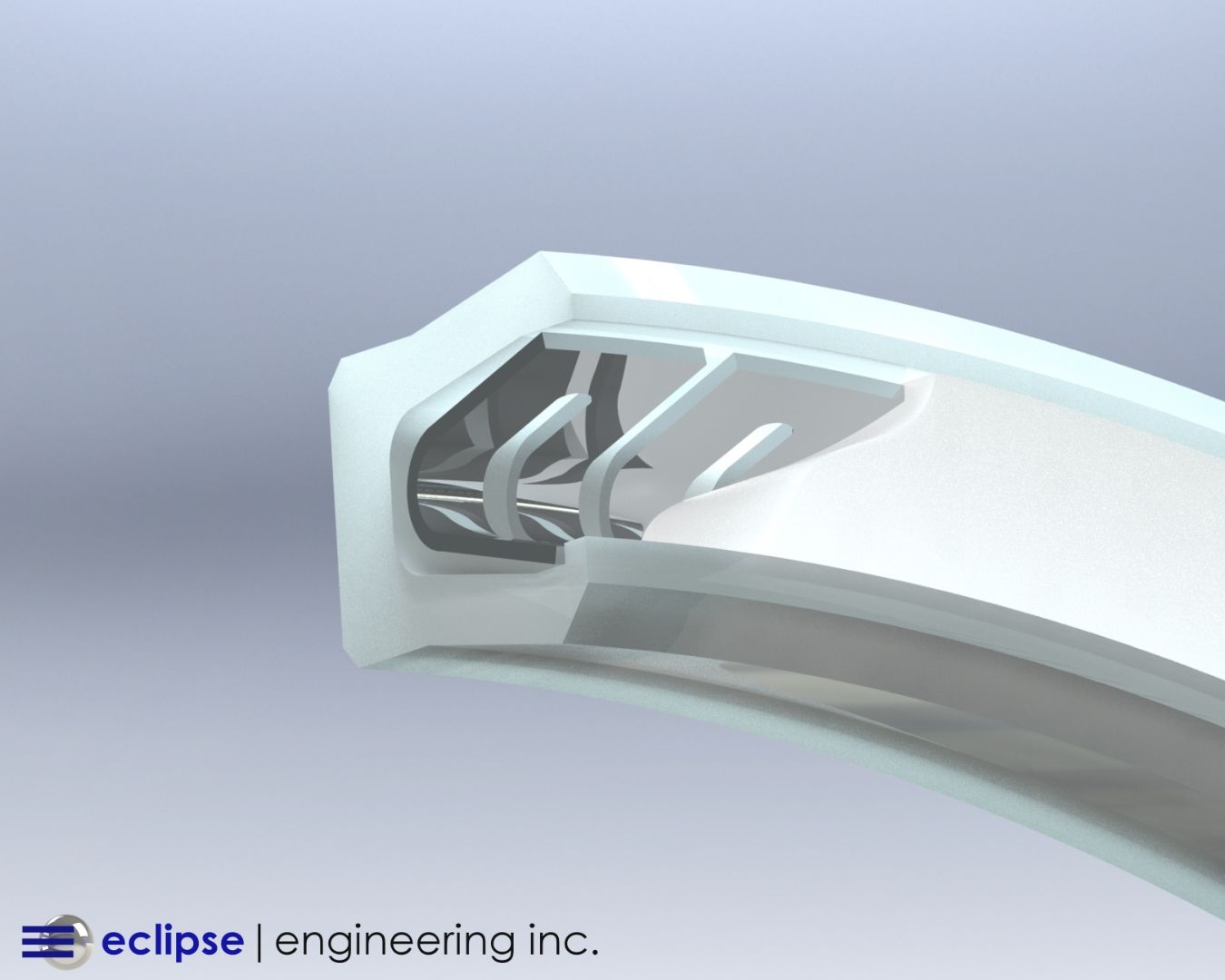
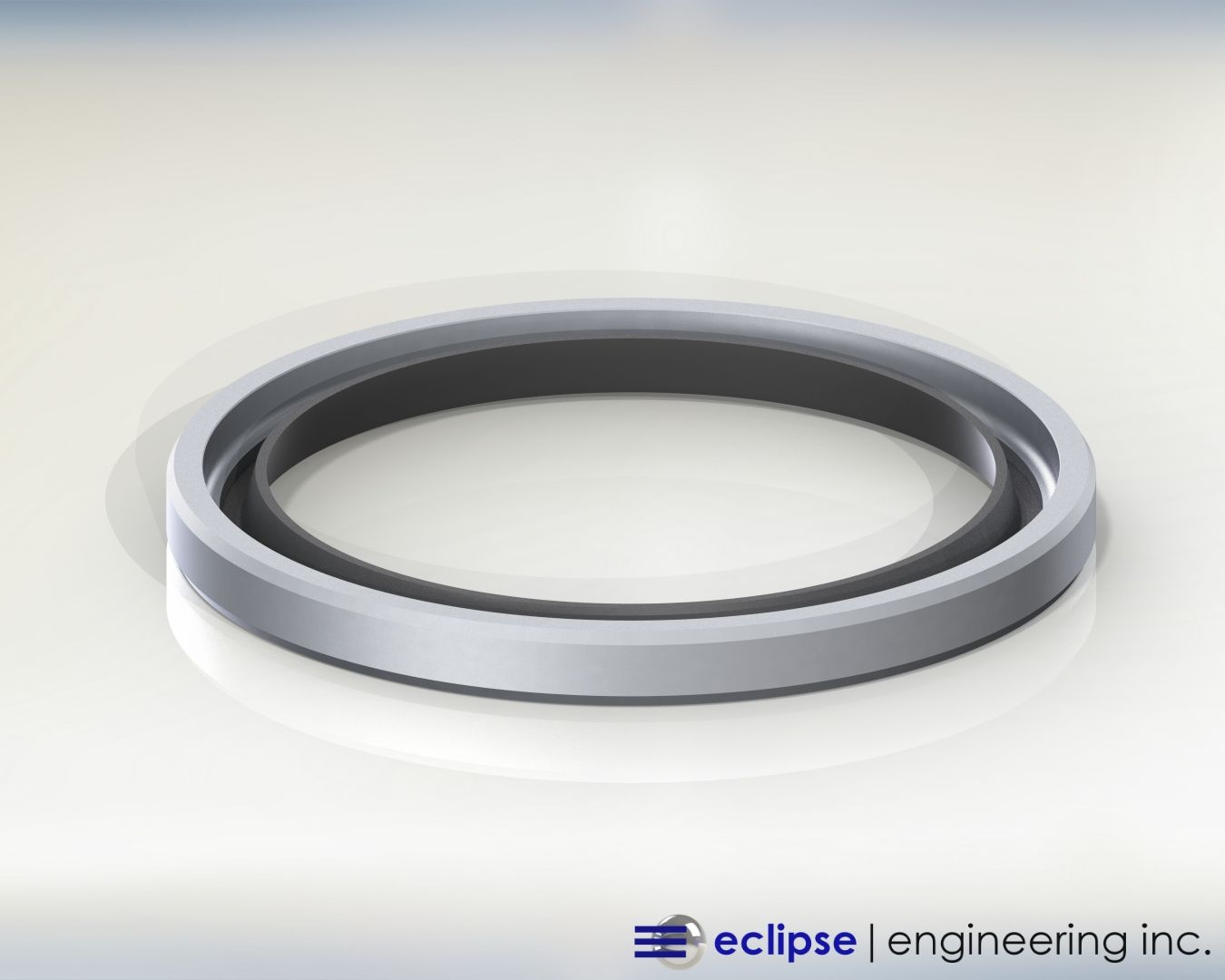
In terms of seal history, the crimped case seal is a relative newcomer, first becoming prevalent in the market about ten years ago. Its hallmark design feature is that it can use as little as two components, the sealing lip and case. This is in contrast to the traditional design that usually requires four components to accomplish the same task.
A CCS functions by having the seal element slip into a small groove in a machined case. The groove is then crimped or compressed to positively engage the PTFE for both internal sealing and element anti-rotation. This eliminates the need for an internal gasket element, affording maximum temperature handling and chemical resistance.
The seal lip can be any one of Eclipse’s PTFE blends. Eclipse can tailor the material selection to optimize the goals of the system. The case can be either aluminum or stainless steel, but aluminum will provide more size options and typically cost less.
Advantages of the Crimped Case Seal
Other than fewer components, the CCS has some key advantages over a componentized seal. First, the case of a CCS is CNC machined. This means the highest tolerance control and no expensive first-time tooling costs. This can significantly improve lead time compared to operations requiring tooling or dies. The crimping of the case is a simple procedure that can be done quickly on a press, rather than a more complicated forming procedure done on a lathe. This can further expedite lead times and run rates.
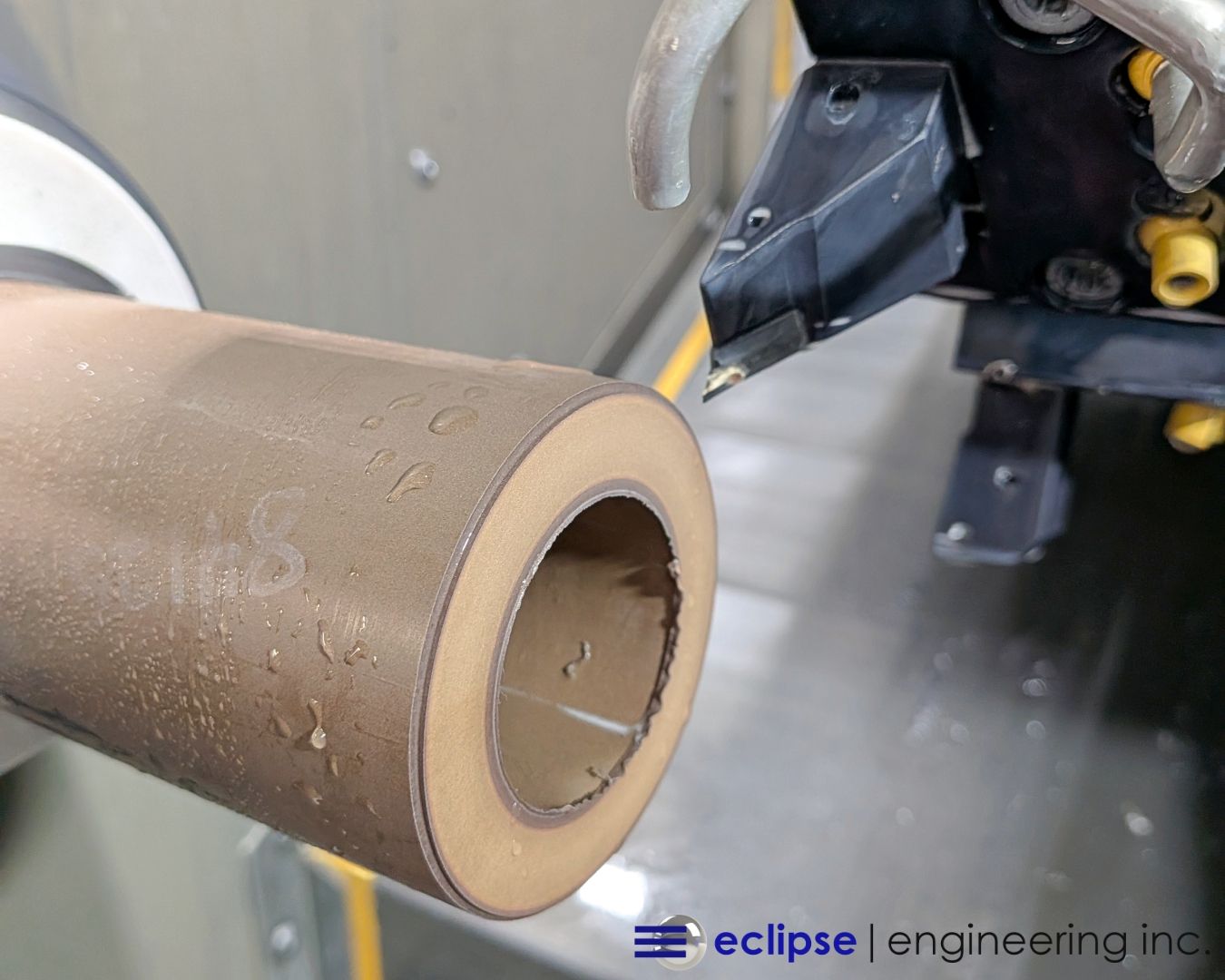
The seal lip itself is also machined into its final shape. This allows for precision interference control and eliminates the need for the forming and shipping of the seal on a separate mandrel.
Limitations of the Crimped Case Seal
There are some limitations to the CCS, though. While there are some great advantages to machining the seal case, this can also be a drawback in high-volume applications. The componentized design will have the option of stamping or roll forming the metal constituents from sheet stock, greatly reducing unit cost.
There are some size restraints to the CCS as well. It is not possible to install a lip into a case much smaller than 1.5”. On the upper end of things, it is difficult to find raw metal tube stock in diameters above 12 inches, with limited options above 6 inches. Therefore, it might not be practical to machine a case with an OD in this range.
Best Applications for Crimped Case Seals
With these aspects in mind, the CCS is best suited for low-volume and/or quick-turnaround applications with shaft sizes from 1.5 to 5 inches. Eclipse also successfully employs crimped case seals in very torque- and friction-sensitive applications such as robotics. Precise control of the lip profile and interference is necessary to provide smooth and accurate movement, and seal volumes are relatively low. Prototyping seals without tooling costs is also a plus for numerous design iterations.
The Traditional Componentized Rotary Lip Seal Design
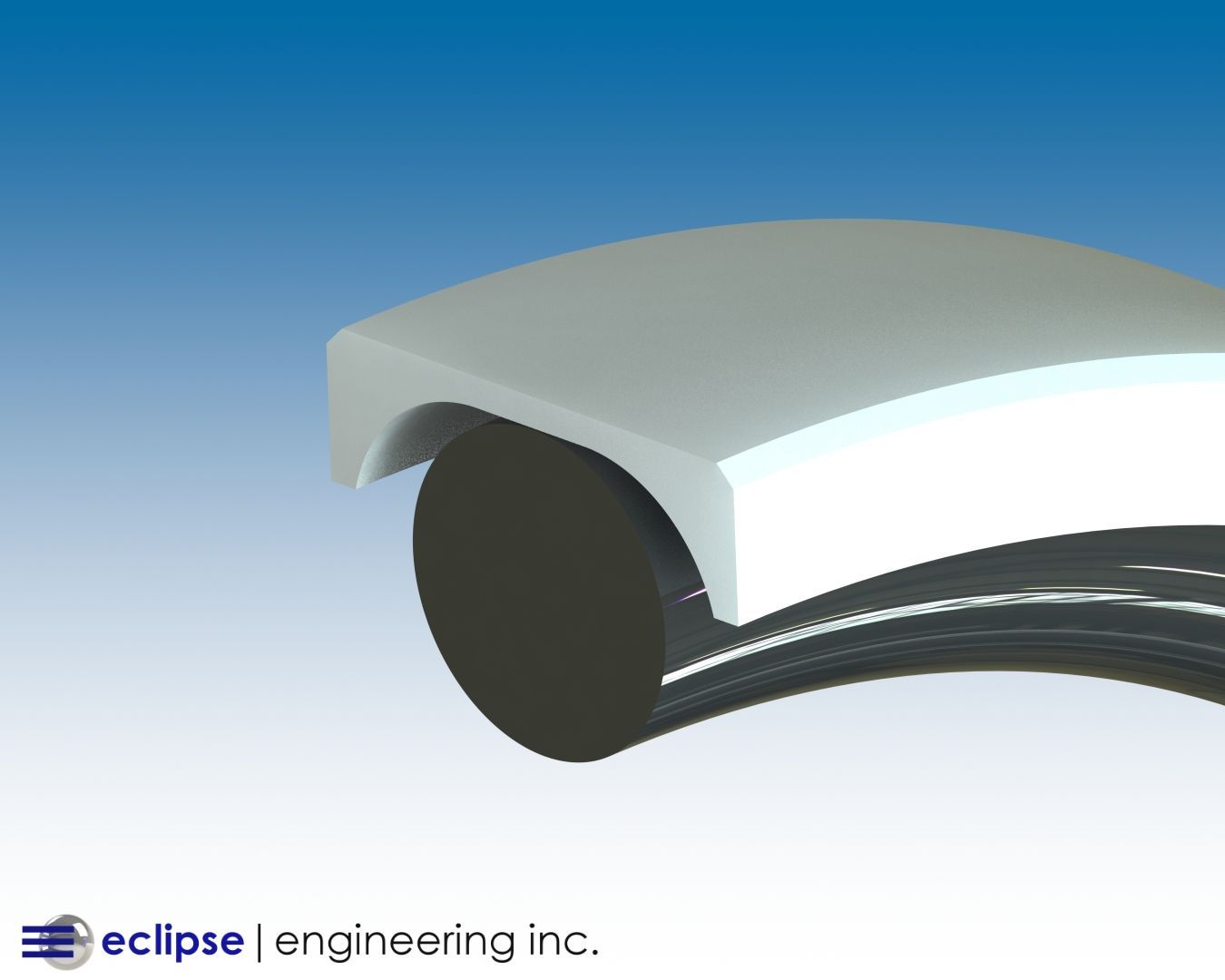
The traditional lip seal design has been around for decades and has seen service in countless applications and industries. In the most basic form, it consists of an outer metal case, the PTFE sealing lip, a thin elastomeric gasket, and a spacer ring. The components are stacked, and a small portion of the outer case is rolled over, usually on a lathe, to compress and permanently hold everything together.
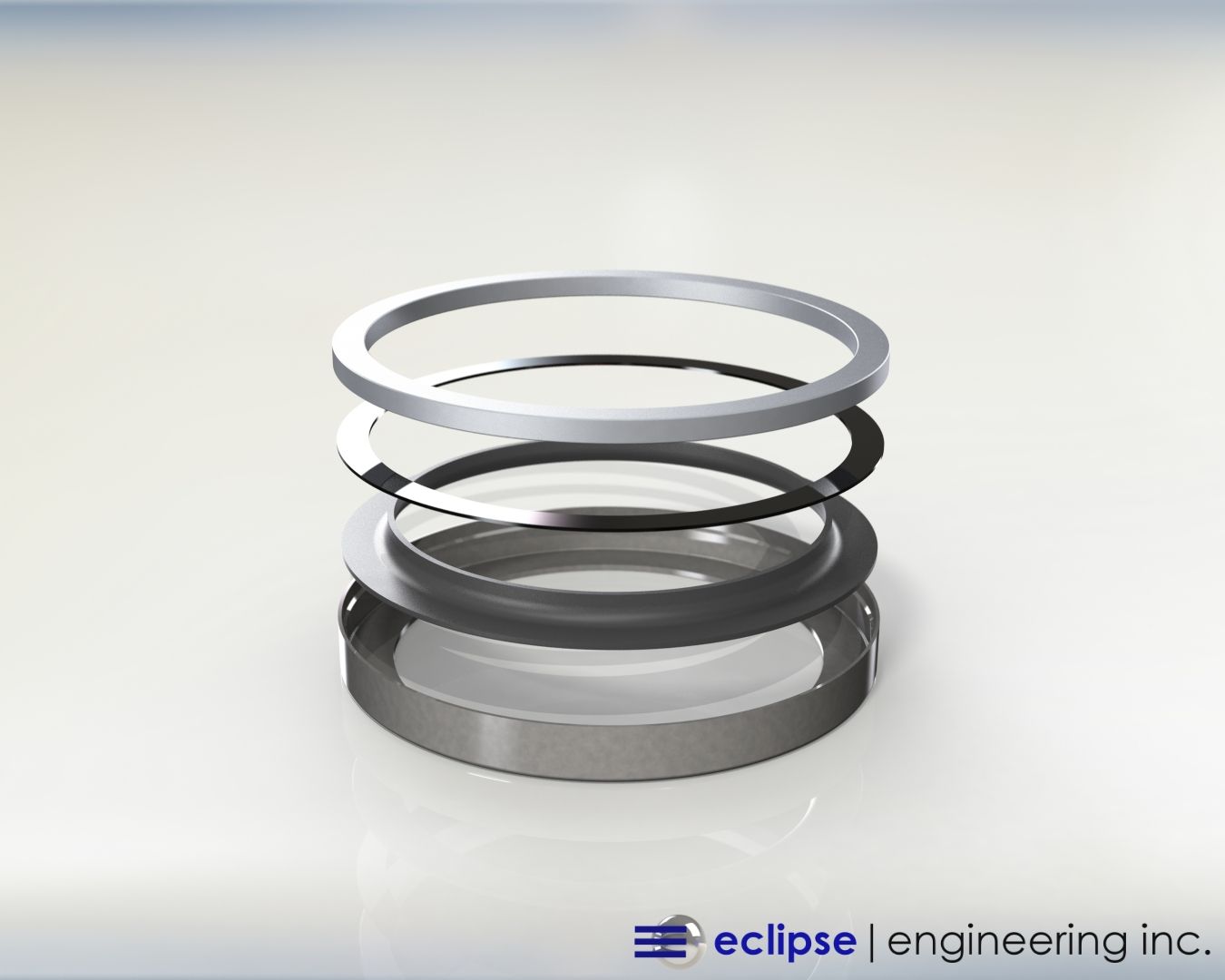
The sealing lip can be any of Eclipse’s PTFE blends. It is machined and assembled simply as a straight, flat disk. This means quick run rates during machining and minimal raw material usage, aiding in low unit costs. The lip must be formed after assembly; typically, this is done by pushing it on a cardboard mandrel that is just under the shaft diameter.
Cases and spacers can be aluminum, stainless steel, or cold-rolled steel. Stainless steel is the most commonly used outer case material, and aluminum is typically used for the spacer.
The gasket serves to provide some spring force to compress and hold the components but also internally seals the inside of the case. It is usually made of standard O-ring-like materials such as NBR and FKM, but the use of specialized high-temperature reinforced NBR is also common.
Advantages of the Componentized Rotary Lip Seal Design
The chief advantage to this design is the ability to economically mass produce the components. In particular, the metal components can be stamped from sheet metal. This, of course, requires die tooling, which can cost thousands of dollars. But at higher volumes, the tooling costs are usually easily amortized, and the resulting unit costs are a small fraction of a machined component.
For slightly lower volumes, spin forming the case and spacer is an option. This involves forming a flat disk of sheet metal over a mandrel while being spun on a lathe. While still requiring tooling, it is often much less expensive than stamp die tooling. Spin forming is often used to form large-diameter cases, where raw billet stock is not available or practical for machining.
Choosing the Right Rotary Lip Seal Design
Both the CCS and traditional rotary lip seal have advantages and disadvantages, and specific application parameters will determine which design is best. The volume of seals needed will be one of the largest deciding factors. Eclipse has the ability to design and manufacture either seal from volumes of one to tens of thousands.
Eclipse has full design and manufacturing flexibility in whichever option fits your needs. Unlike some suppliers, Eclipse won’t obligate you to choose only one solution. Eclipse has many customers with legacy applications using the traditional componentized design, but they may only need a handful of seals every year.
Eclipse has things covered in this situation, as we are happy to machine every component, avoiding any tooling costs. Contact us today.