The Different Types of Seal Glands and How to Choose the Right One
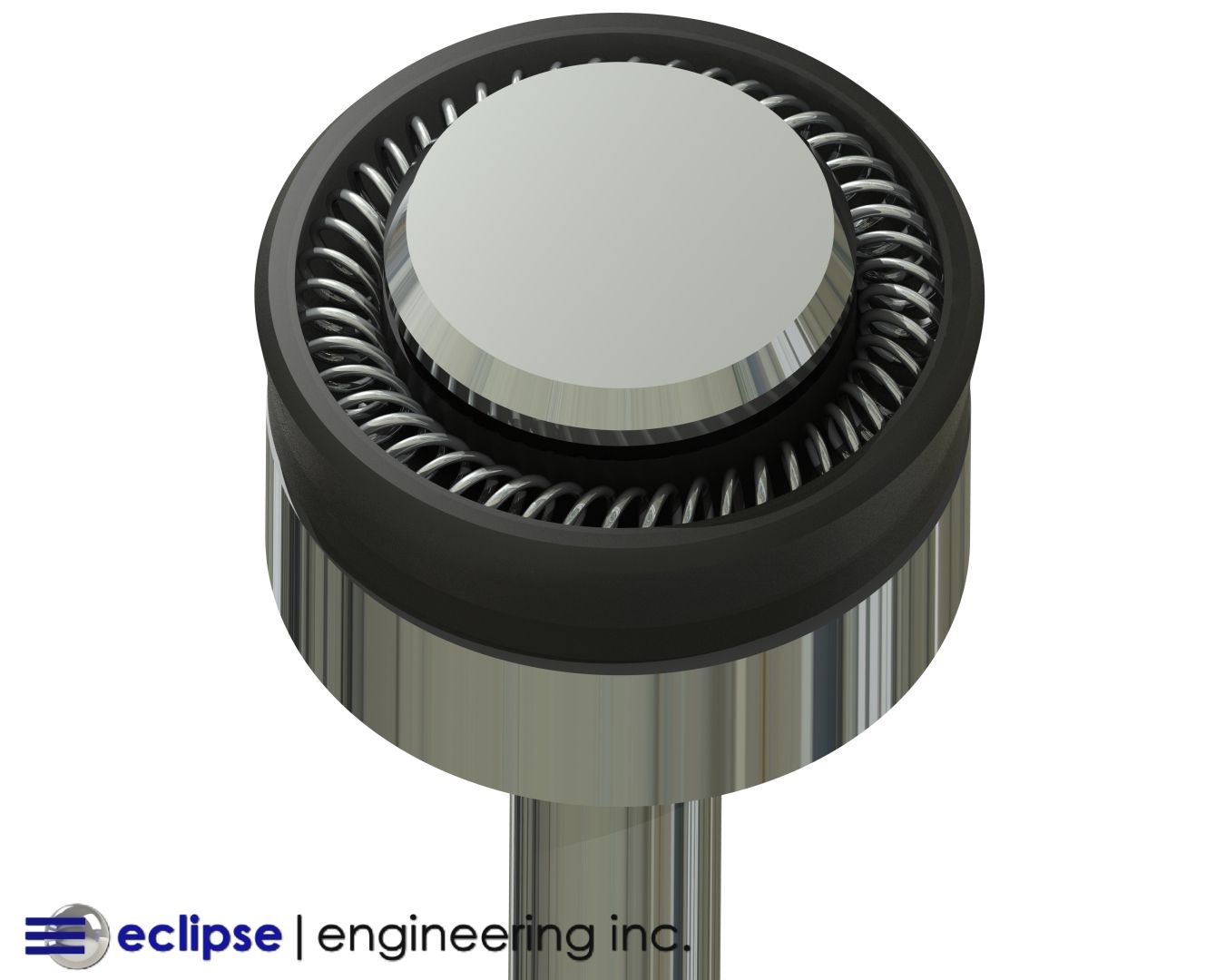
When designing a successful sealing system, factors such as leakage control, wear resistance, and seal material selection often receive the most attention. However, another critical component can have just as much influence on performance: the seal gland.
A seal gland, also referred to as a groove, is the space within the hardware that houses and retains a seal. Its design affects not only how the seal functions but also how easily it can be installed, removed, or replaced.
Different seal materials and configurations require different gland designs. For example, an elastic O-Ring may be relatively easy to install in a solid gland, while a PTFE spring-energized seal may require a split or stepped configuration to prevent damage during installation.
Understanding the different types of seal glands is essential when selecting a sealing solution. Below, we'll explore four common gland designs, their advantages and limitations, and the seals best suited for each.
What Are the Four Main Types of Seal Glands?
The four common types of seal glands used in rod and piston sealing applications are solid, open, split, and stepped glands. Each offers different benefits depending on the seal material, installation requirements, and hardware configuration.
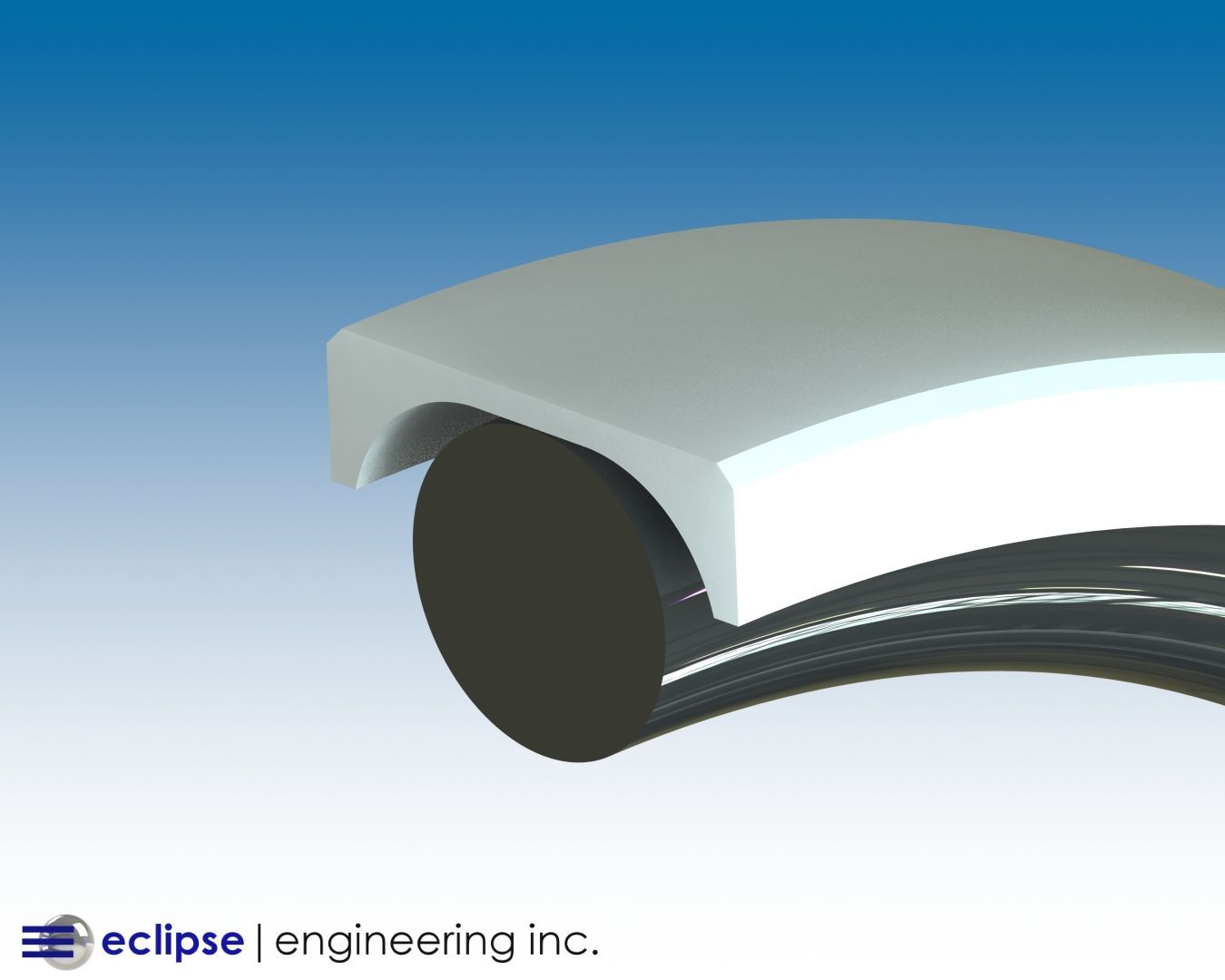
Solid glands feature a simple rectangular groove and are commonly used with O-Rings and certain O-Ring energized PTFE seals.
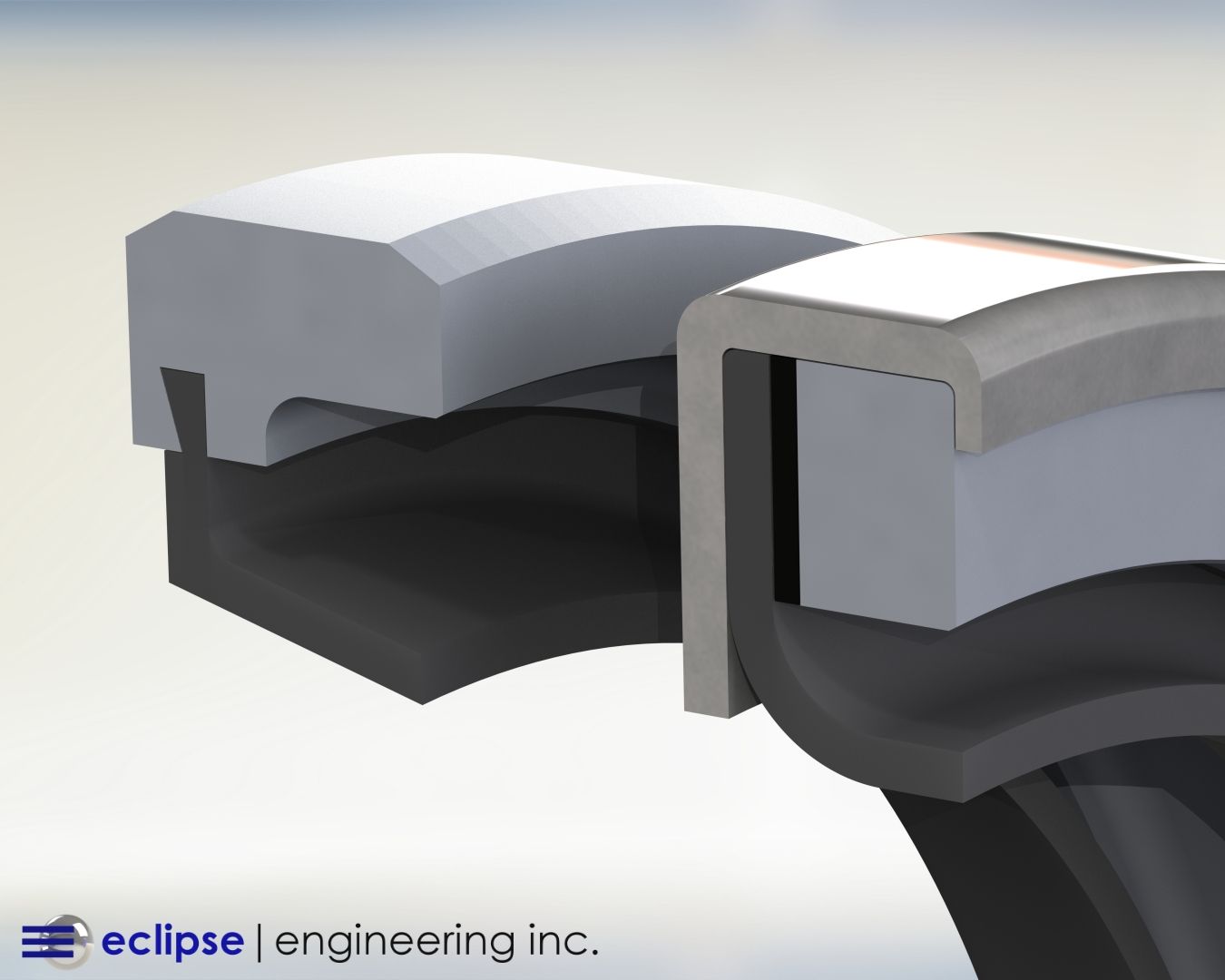
Open glands allow seals to be installed directly into a counterbore and are typically best suited for metal-cased seals, including rotary lip seals and cased spring energized seals.
Split glands use a removable retaining component to simplify seal installation, removal, and maintenance. They are particularly useful for spring energized seals and applications requiring frequent seal replacement.
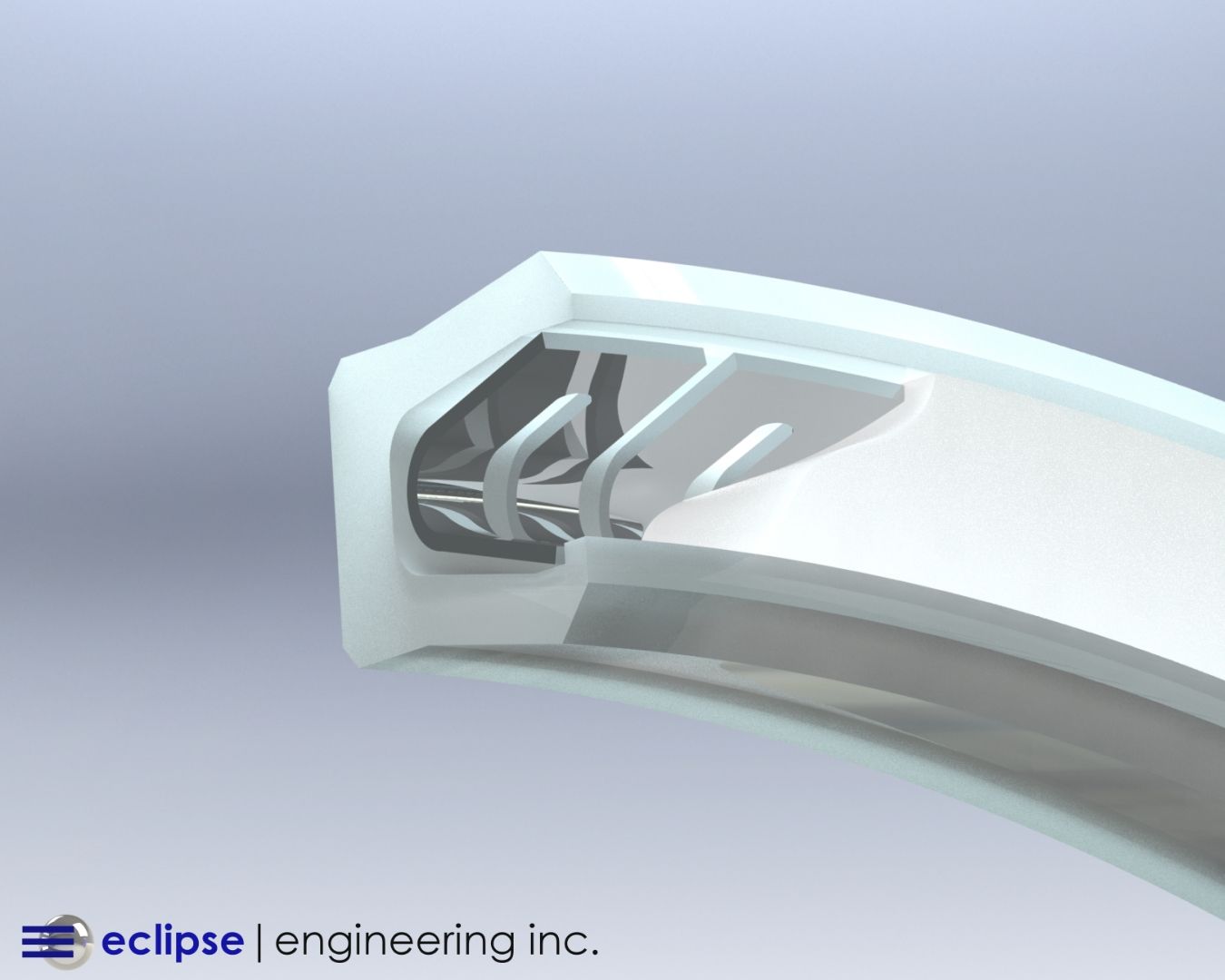
Stepped glands incorporate a small retaining step that secures the seal without additional hardware. They are often used in spring energized sealing applications where a one-piece hardware design is preferred.
Choosing between these designs involves balancing installation requirements, manufacturing complexity, and long-term seal performance.
Solid Glands
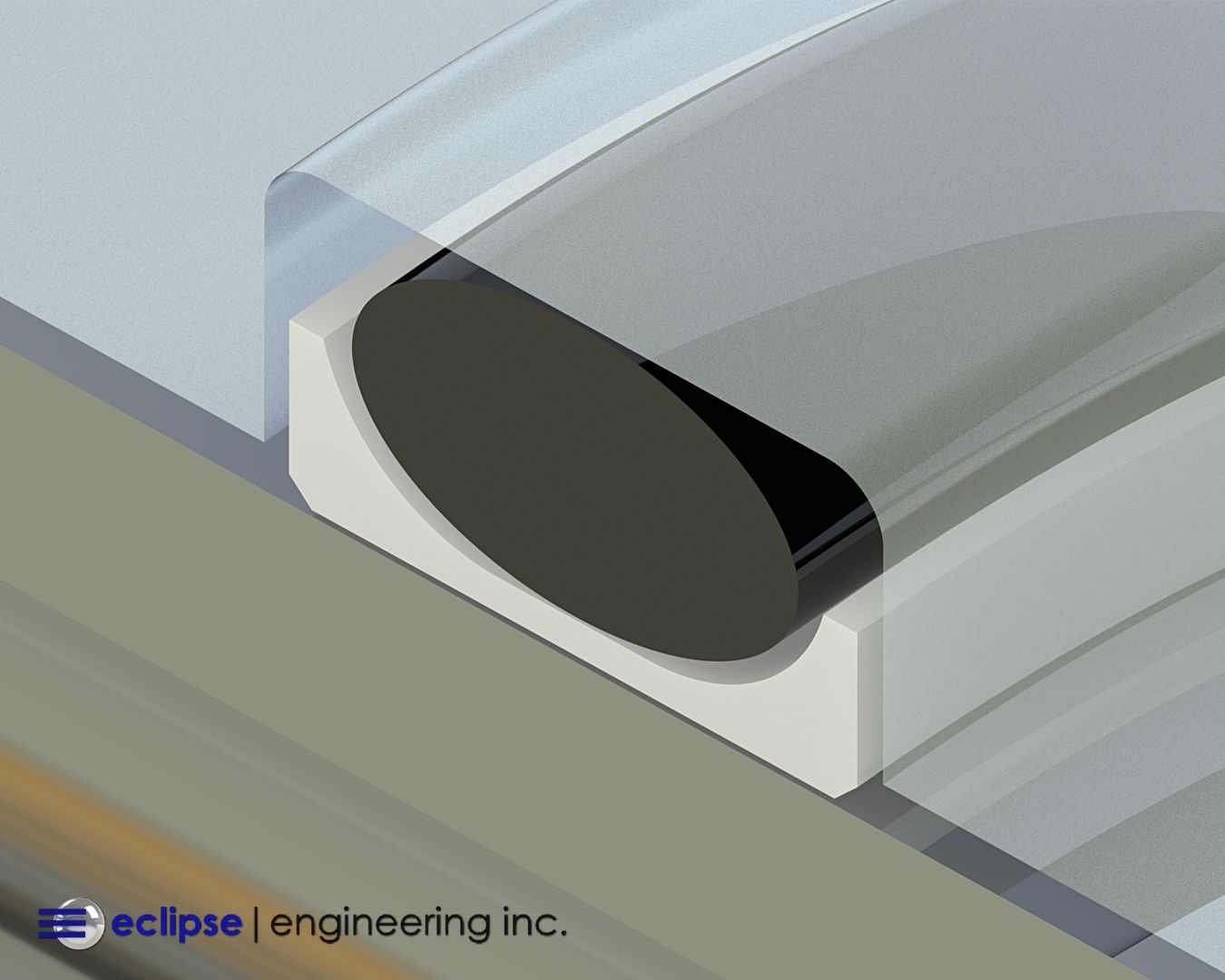
Solid glands are among the simplest and most widely used seal gland designs. They consist of a rectangular groove machined directly into a piston or housing, without any removable components.
These glands are particularly well suited for O-Rings because the elasticity of the material allows the seal to stretch or compress during installation. For example, an O-Ring can typically be stretched over a piston and seated into its groove with minimal difficulty.
However, installing seals made from less elastic materials, such as polytetrafluoroethylene (PTFE), introduces additional challenges.
Installing PTFE Seals in Solid Glands
PTFE seals, including Eclipse's ESR Seal Rings and EDS Channel Seals, can be designed for solid glands when used with an O-Ring energizer. Unlike conventional elastomeric O-Rings, PTFE seals require greater care during installation because the material does not readily return to its original shape after deformation.
In piston applications, the PTFE seal must be stretched over the piston and into the groove. Larger cross-section seals may require specialized installation tools to distribute force evenly and minimize the risk of damage. Once installed, the seal may also need to be resized to ensure proper seating.
Rod seal installations present a different challenge. The seal often needs to be folded inward into a shape resembling a kidney bean, allowing it to fit inside the bore before expanding into the groove. This process, commonly called kidney beaning, must be performed carefully to avoid permanent creases or deformation.
Higher-modulus materials, such as ultra-high-molecular-weight polyethylene (UHMW), can be even more difficult to manipulate.
Seal diameter is another important consideration. At very small diameters, installation into a solid gland may be impractical or impossible. Removing a worn seal can also be difficult without damaging it.
Can Spring Energized Seals Be Used in Solid Glands?
Spring energized seals are generally not recommended for solid gland configurations.
The relatively rigid PTFE jacket and internal spring make these seals more susceptible to damage when stretched or folded during installation. Excessive deformation can permanently affect the spring or seal geometry, potentially compromising performance.
Although certain large-diameter applications with small seal cross-sections may allow installation into solid glands, these situations require careful engineering evaluation.
For most spring energized sealing applications, alternative gland designs provide a more practical solution.
Open Glands
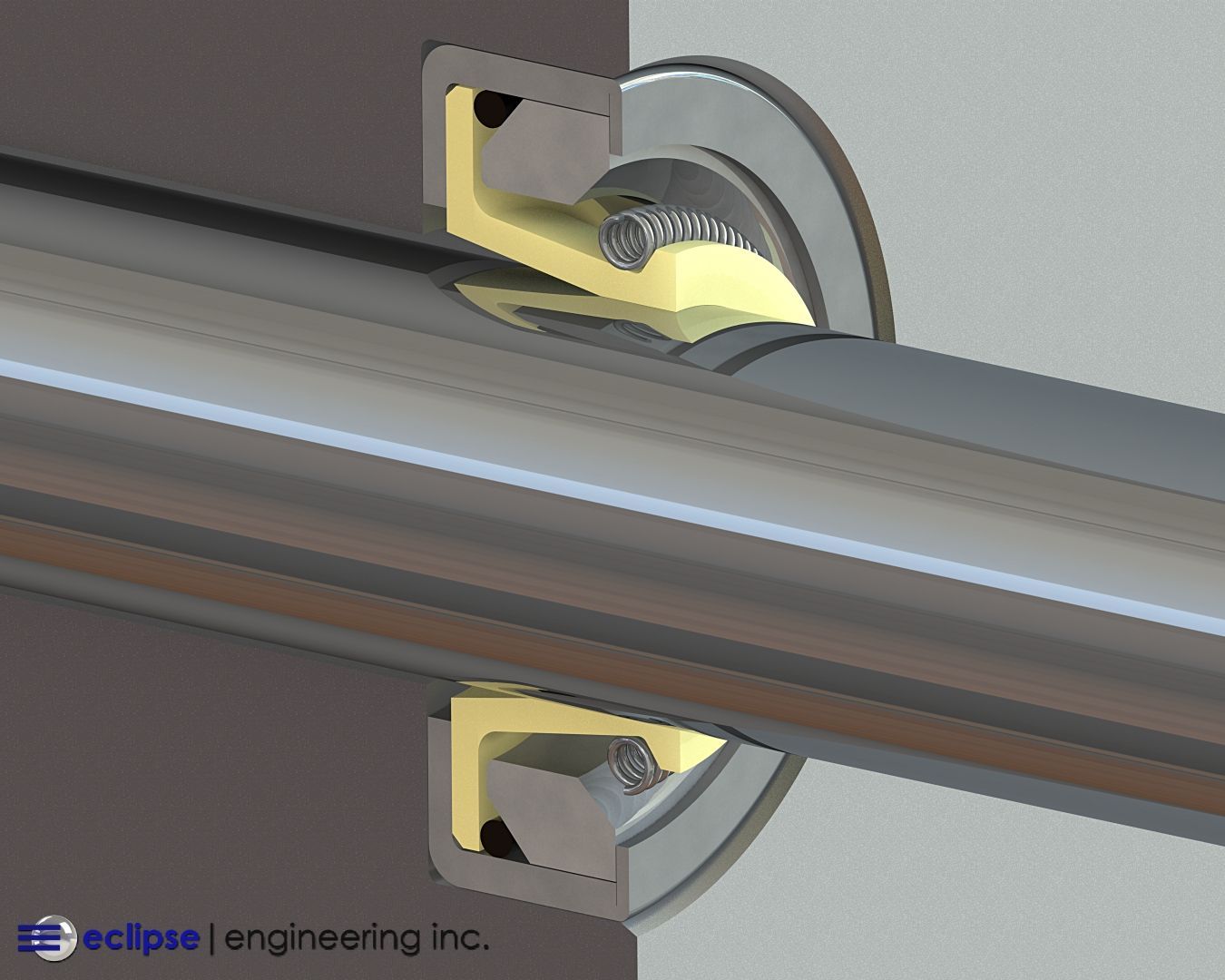
Open glands are typically formed by machining a counterbore into the face of a hardware component. Unlike solid glands, one side remains open, allowing the seal to be inserted directly into the cavity.
This configuration is particularly useful for seals with metal cases. The outside diameter of the case is designed to be slightly larger than the gland diameter, creating a light press fit that holds the seal securely in place.
The metal case provides the retention necessary to prevent movement during operation.
Without a case or another retaining feature, a seal may gradually move out of an open gland, even in rotary applications. This movement can compromise the sealing system.
For this reason, open glands are commonly used with products such as Rotary Lip Seals, Cased Spring Energized Seals, and MicroLips.
Open glands offer relatively straightforward installation, but selecting a seal with the appropriate retention characteristics is essential.
Split Glands
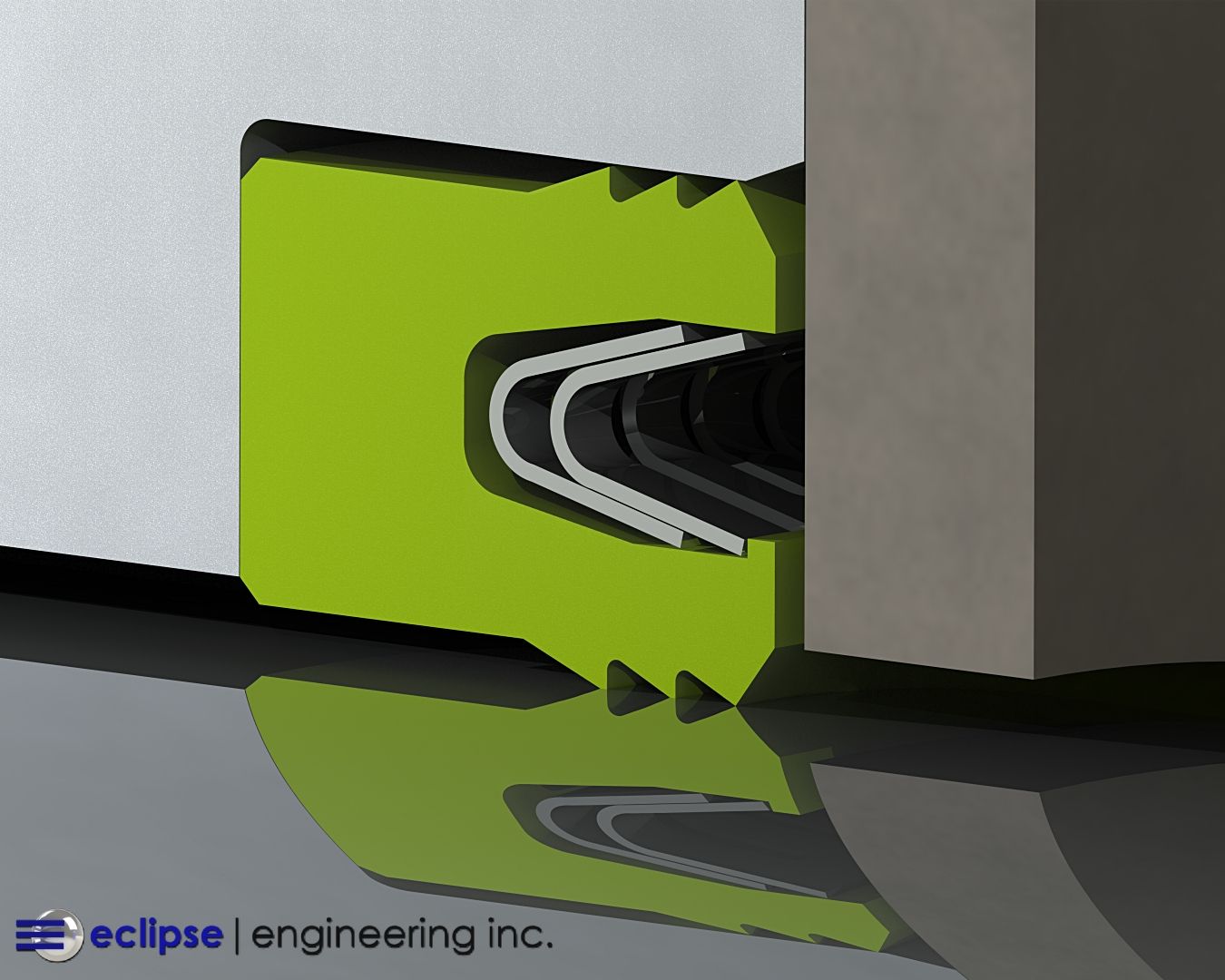
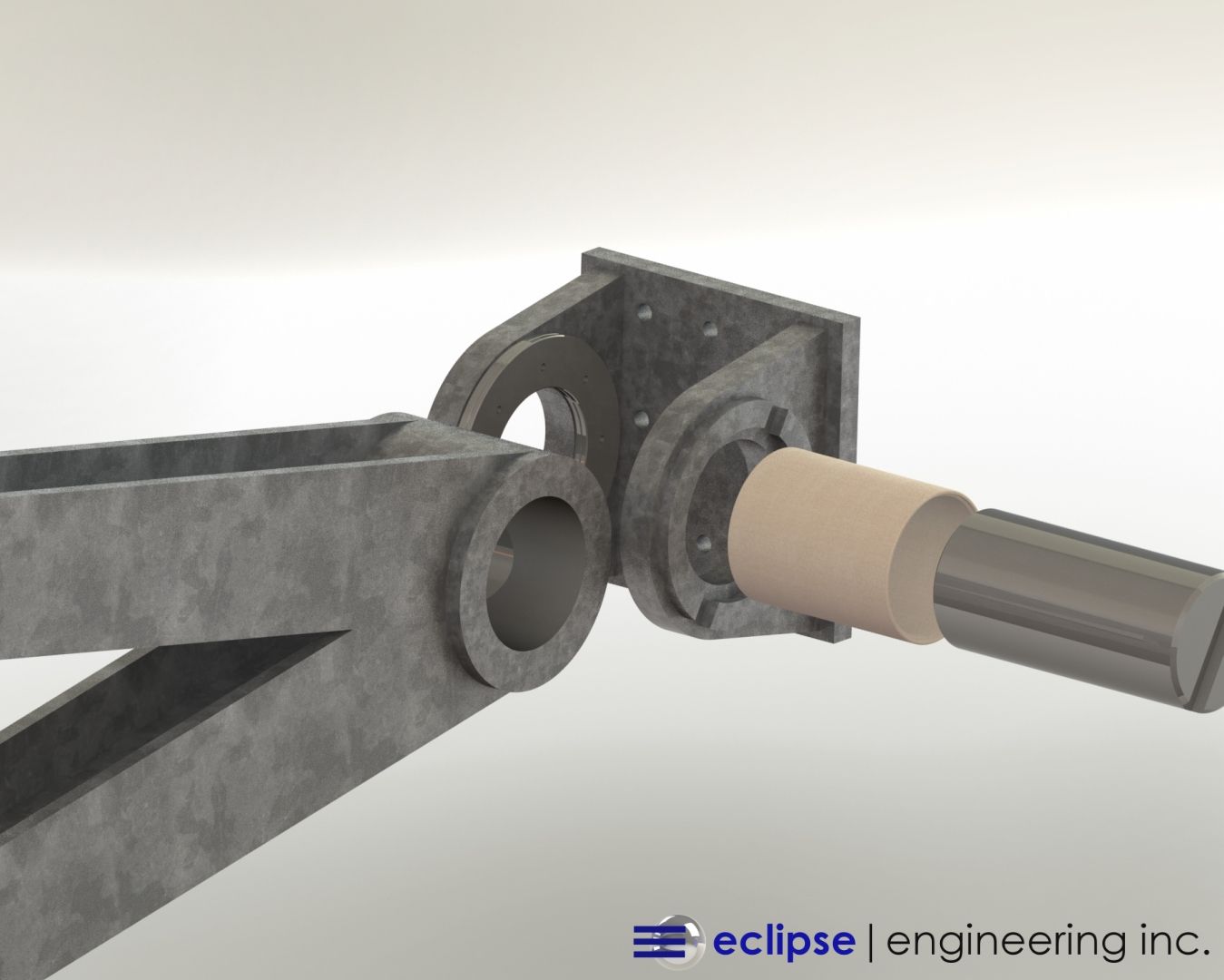
Split glands, also known as two-piece glands, provide a practical solution when seal installation or removal would otherwise be difficult.
This design consists of an open gland that is mechanically closed after the seal has been installed. A removable cover plate secured with fasteners is one common configuration.
By allowing the seal to be placed directly into the groove, split glands eliminate much of the stretching, folding, or manipulation required with solid glands.
Advantages of Split Gland Designs
One of the primary benefits of split glands is simplified seal installation.
In many cases, the seal can be placed directly into the gland without specialized tools. This reduces the risk of damaging the seal during assembly, particularly when working with less flexible materials or delicate spring energized configurations.
Split glands also make maintenance more manageable. Seals used in high-wear applications or equipment requiring regular field service can be removed and replaced without the same installation challenges associated with solid glands.
Another important advantage involves surface preparation.
In critical gas sealing and cryogenic applications, spring energized seals may require highly polished gland surfaces to achieve effective leakage control. The open configuration of a split gland makes these surfaces easier to access during machining and polishing.
Split Gland Design Considerations
Despite these advantages, split glands introduce additional hardware requirements.
Removable covers, fasteners, and other retaining components can increase manufacturing complexity and assembly time. Some hardware configurations also provide limited space for a split design, especially when multiple or redundant seals are required.
In certain applications, a seal carrier assembly or retaining snap ring may provide an alternative means of closing the gland.
Even with these considerations, split glands are sometimes the only practical solution. Small-diameter O-Ring energized seal rings and many spring energized seals cannot be safely installed in other gland configurations without risking damage.
Stepped Glands
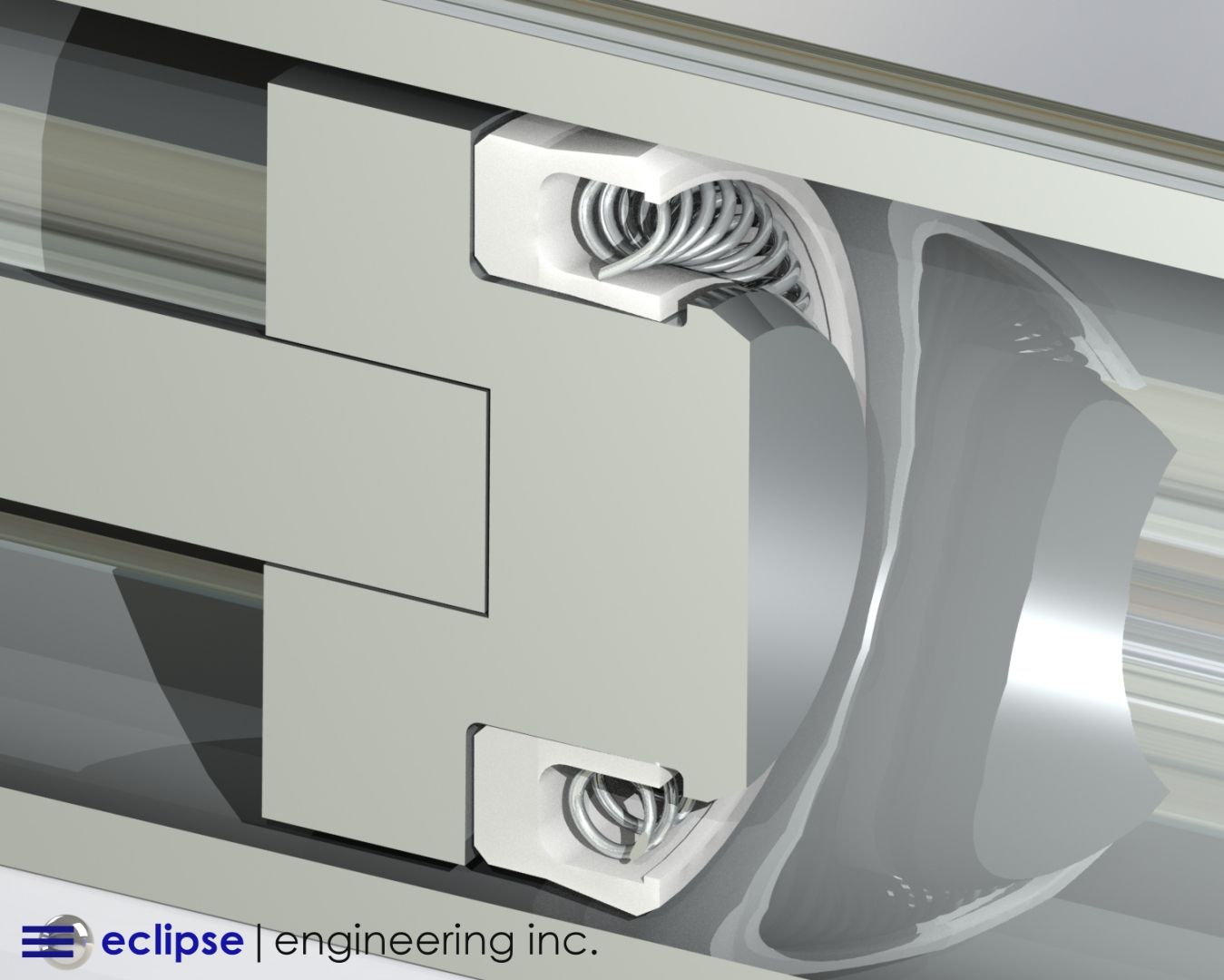
Stepped glands offer another option for retaining spring energized seals without requiring a separate cover plate or additional hardware.
A stepped gland resembles an open gland but includes a small retaining step or barb near the open side. The seal is installed heel first, with a specially designed scraper-style lip that locks behind the step.
Although the retaining feature is small, it can provide effective seal retention in demanding applications.
The step height varies depending on the seal cross-section and spring configuration but is commonly 0.020 inches or less.
Once installed, the seal is securely retained and may be difficult to remove without damage.
Benefits of Stepped Glands
One of the biggest advantages of a stepped gland is that it combines relatively straightforward seal installation with a one-piece
hardware design.
Unlike split glands, stepped glands do not require separate retaining plates or fasteners. This can be particularly beneficial in piston applications where maintaining a one-piece design is desirable.
Stepped glands can also be used in demanding reciprocating applications where reliable seal retention is essential.
However, these benefits come with manufacturing considerations.
The retaining step must be machined precisely, and small details such as chamfers, tool radii, and gland dimensions require careful control. Compared with other gland types, stepped glands can be more challenging to manufacture.
The seal itself must also be designed with the appropriate lip geometry to engage the retaining feature correctly.
How to Choose the Right Seal Gland Design
Selecting the appropriate gland involves more than determining whether a seal will physically fit inside the hardware.
Engineers must consider the relationship between the seal material, gland geometry, operating conditions, and installation process.
Several factors can influence the decision:
- Seal material and flexibility: Elastomeric O-Rings are generally easier to install in solid glands, while less elastic materials such as PTFE may require specialized installation methods.
- Seal configuration: Spring energized seals often benefit from split or stepped glands, while metal-cased seals are commonly suited to open glands.
- Hardware design: Available space, manufacturing capabilities, and the ability to incorporate additional retaining components can limit gland options.
- Installation and maintenance: Applications requiring frequent seal replacement may benefit from a gland design that allows easier access.
- Operating conditions: Pressure, temperature, motion, and leakage requirements should all be evaluated alongside gland geometry and surface finish.
Installation requirements should be considered early in the design process rather than after the seal and hardware have already been finalized.
A gland that appears suitable based on dimensions alone may still create significant assembly challenges or increase the risk of seal damage.
For additional guidance, explore Eclipse's article on Tips for Successful Seal Installation, which discusses installation methods, tooling, and considerations for different sealing materials.
Eclipse Engineering Can Help With Seal Gland Design
The way a seal is installed and retained within its hardware plays a critical role in overall sealing system performance. Even a well-designed seal can experience problems if the gland configuration does not accommodate its material properties, geometry, or installation requirements.
At Eclipse Engineering, our experience extends beyond standard catalog seal recommendations. We work with customers to evaluate sealing challenges, identify appropriate gland configurations, and develop solutions that account for both performance and practical installation requirements.
From conventional O-Ring energized seals to specialized spring energized designs, our team brings decades of seal design and manufacturing experience to complex applications.
Contact Eclipse Engineering to discuss the best seal and gland configuration for your next project >